Free Structural Engineering Spreadsheets and Tools for UK Engineers
10 October 2026 · 9 min read
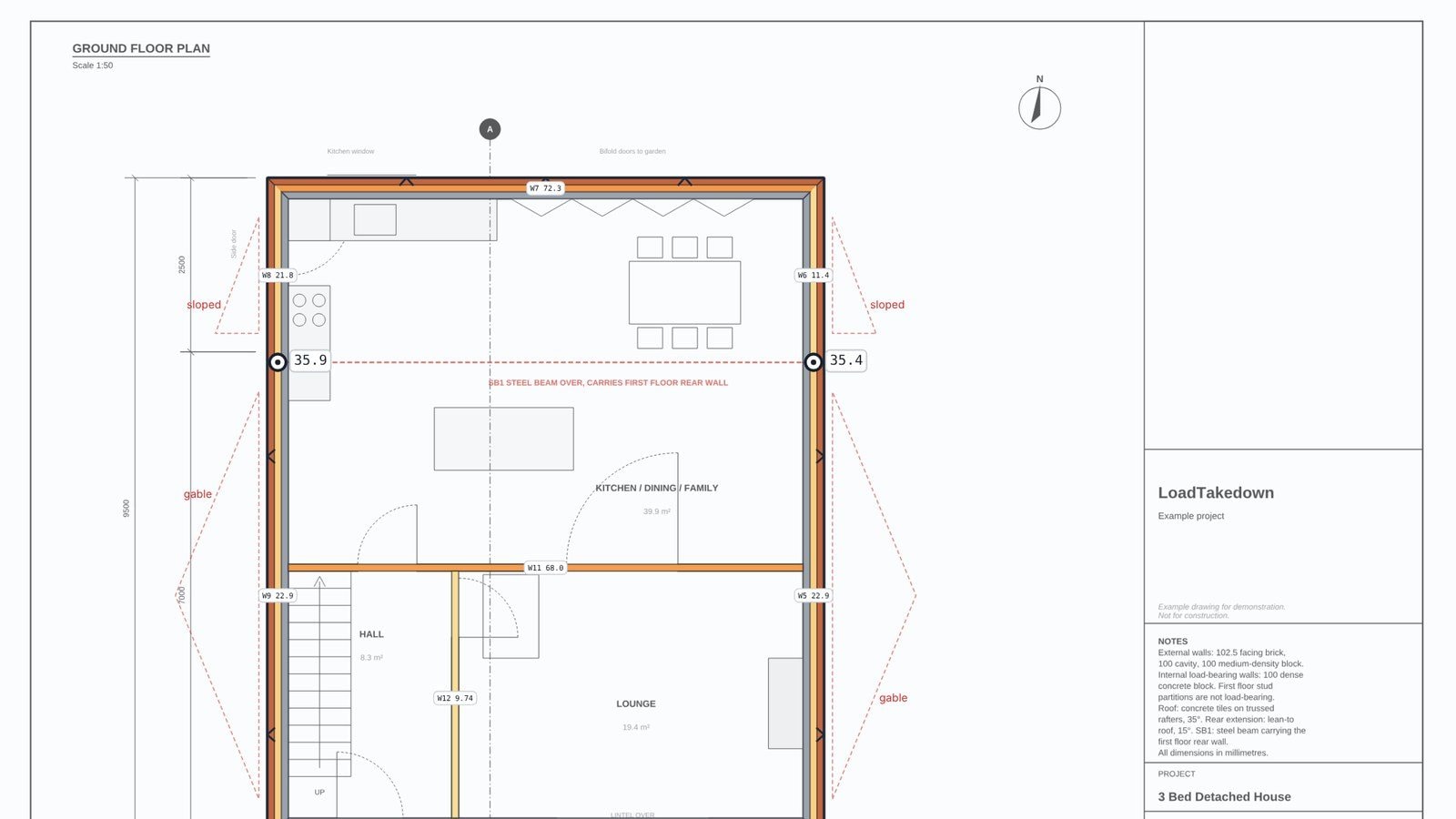
A checked list of 11 free structural tools for UK engineers: what each covers, which code it uses, and what is genuinely free versus trial only.
The most useful free structural tools for UK work are the steel sector's Interactive Blue Book and design tools, Eurocode Applied (free online Eurocode calculations with a UK option), and a few free calculators for loads, beams and lintels. Most "free spreadsheet" downloads you find through a search are of unknown origin and not worth the risk. Every tool in this list was checked on its owner's own site.
Which free structural tools are actually worth using?
Search results for free structural spreadsheets are mostly file mirrors and document-sharing uploads of unknown origin. Nobody can tell you who wrote those sheets, which code they follow, or whether the formulas were ever checked.
Every tool below is on its owner's own site. For each one we note whether it is fully free or a free tier, and what we could and could not confirm about the code basis. No downloads are involved except where a vendor offers one directly.
| Category | Resource | Covers | Code basis | Free or free tier | Link |
|---|---|---|---|---|---|
| Loads | LoadTakedown free spreadsheet | Wall line loads from area loads and spans, summed over each level (Excel) | BS EN 1990 load factors, you enter the loads | Free, no account, email asked | /free-spreadsheet |
| Loads | LoadTakedown tributary area calculator | Floor line load in kN/m from spans and loads | UK practice (kN/m²), with a US mode (psf); you enter the loads | Fully free, no sign-up | /tools/tributary-area-calculator |
| Loads | LoadTakedown steel beam, lintel and column calculators | Beam UDL and reactions, lintel load triangle, floor-by-floor column takedown | UK practice (kN/m²), with a US mode (psf, ASCE 7-22 combinations); you enter the loads | Fully free, no sign-up | /tools/steel-beam-load-calculator |
| Steel | Interactive Blue Book | Section properties and design data for sections, bolts and welds | BS EN 1993-1-1 with the UK National Annex, plus BS 5950 data | Described as freely available | steelconstruction.info |
| Steel | Steel sector design tools | Compression, bending, composite beams, frame stability, base, fin and end plates, wind loading | Eurocodes, with the UK NA stated for several tools | Described by the site as free | steelconstruction.info |
| Concrete | Eurocode Applied (EN 1992 tools) | Online concrete design calculations with printable reports | Eurocode 2, UK option in the NDP list | Fully free, donations optional | eurocodeapplied.com |
| Timber | SkyCiv Eurocode 5 timber calculator | Timber beams and columns, ULS and SLS, solid, glulam, LVL | BS EN 1995-1-1, NA selection not stated | Listed as a free tool; the wider module is paid | skyciv.com |
| Masonry and lintels | LoadTakedown padstone bearing calculator | Bearing stress under a beam end in N/mm² (or psi in US mode), with and without a padstone | You enter the masonry strength | Fully free, no sign-up | /tools/padstone-bearing-calculator |
| Masonry and lintels | Catnic lintel selector | Helps pick a Catnic lintel for your wall and load | Manufacturer data | No price or login shown on the page | catnic.com |
| Masonry and lintels | IG Lintels lintel selector | Filters steel and Hi-therm+ lintels by wall type, cavity and load | Manufacturer data | No price or login shown on the page | iglintels.com |
| General | Eurocode Applied (EN 1991, 1993, 1998) | Online Eurocode calculations with report output | Eurocodes, UK NDP option | Fully free, donations optional | eurocodeapplied.com |
| General | SkyCiv free beam calculator | Reactions, shear, moment, deflection, stress for simple and cantilever beams | No design code named | Free version, limited loads | skyciv.com |
| General | Calcs.com free tools | Beam analysis, section properties, bolt groups and more | Mixed, mostly US and Australian | Six tools free with no sign-up; the full library needs a trial or subscription | calcs.com |
The "free" column reflects what each site said when we checked it in October 2026. Vendors change terms, so check before you build a workflow around any of them.
What should I use for load takedown and floor loads?
Start with loads, because every other check depends on them.
The free load takedown spreadsheet is an Excel file. For each wall you enter the area loads and spans for the roof and each floor, plus the wall's self-weight, and it gives the characteristic and ULS line load at the base, a rough footing width and a one-page summary, with a library of typical UK loads to copy from. It is our own, so weigh that accordingly. It suits small residential jobs where you want to see every number. It is not a design check. The template article shows how each row works.
Free load takedown spreadsheet
SLS and ULS line loads for every wall, a UK load library and a footing width guide. Free Excel file, no account.
The tributary area calculator is a single-purpose web tool: enter the spans either side of a wall or beam and your dead and imposed loads, and it returns the loaded width and line load in kN/m. It is a quick way to check a hand calculation. Alongside it sit the steel beam load calculator, the lintel load calculator, the padstone bearing calculator and the column load calculator. If you are unsure how the width is found, read loaded width and the note on two-way floors.
Neither tool picks your loads for you. For typical UK values see floor and roof loads and characteristic versus design loads.
Free sheets cover one wall at a time, so use the app when the whole building needs carrying down.
Try the example in the appWhat free steel design tools are there?
Steel is the best served. The steel sector publishes a set of free tools, led by the Interactive Blue Book. It gives section properties and design data for open and hollow sections, bolts and welds, for both Eurocode 3 and BS 5950. Its "About the data" page says the Eurocode data are to BS EN 1993-1-1 and the related parts, with the partial factors and other parameters from the UK National Annexes. The steel sector describes it as freely available, and it runs on the web with nothing to install.
Alongside it are tools for compression and bending resistance, composite beams, the stability of braced multi-storey frames, base plates, fin plates and end plates, and a wind loading calculator for rectangular buildings. Several of these state that they follow the UK National Annex. The site describes the set as free software and spreadsheet tools. It does not set out licence terms tool by tool, so read the terms on each download.
The page says it is based on the first generation of Eurocodes, which it says are in force until March 2028. Some tools also still refer to older section names, so check that the section you pick still exists in the range you can buy.
What about concrete?
For concrete, the best free option we could verify is Eurocode Applied. It runs Eurocode calculations in the browser and gives a printable report with the working shown. The site says the tools are free for personal and professional use. Its parameter list includes a United Kingdom option, which fills in the nationally determined parameters. The site does not say every calculation supports every parameter, so look at what the report actually used.
You may expect The Concrete Centre's RC Spreadsheets to be on this list. As far as we could tell they are not free: there is a trial with a few sheets after registration, and a licence for full use. Check The Concrete Centre's current terms.
Is there a free tool for timber?
Only one that we could verify. SkyCiv's Eurocode 5 timber calculator checks beams and columns to BS EN 1995-1-1 at ultimate and serviceability limit states, with solid timber, glulam and LVL. It is listed as a free tool, but it sits inside a paid module on the same page. The page does not mention National Annex selection, so confirm which factors it applies before using the result.
TRADA span tables are not on this list. We could not confirm a free version, and they are sold as a paid publication. Avoid unofficial PDF copies, which may be out of date.
Are there free tools for masonry and lintels?
Lintel manufacturers publish selectors. The IG Lintels selector filters by wall type, lintel type, cavity width and load level and returns matching products. Catnic offers a lintel selector too, and its guidance says to choose by wall type, lintel length and the load above. Neither page shows a price or asks for a login, but neither calls itself free either, so the table is worded carefully.
These are product selectors, not lintel designs. They pick a product for a load class, so you still need to know the load. Work out the masonry, floor and roof load on the lintel first, and refer anything outside the manufacturer's tables back to their technical team. Our beam to foundation article shows how loads reach a lintel's bearings.
Which general calculators are worth a look?
Eurocode Applied also covers EN 1991 (actions), steel to EN 1993 and seismic to EN 1998, so it is a good bookmark.
SkyCiv's free beam calculator is good for reactions, shear, moment and deflection on a simply supported or cantilever beam. The free version allows up to 2 point loads, 2 distributed loads and 2 moments. It does not name a design code, so it analyses but does not check to a Eurocode.
Calcs.com has six free tools with no sign-up. The beam tool works in imperial units, and several others follow US or Australian standards. Saving, PDF export and the full calculation library need a trial or subscription. It is useful for section properties, less so for a UK check.
How do I use free tools safely?
A free tool is a calculation aid, not a sign-off. Three habits cover most of the risk.
Check the code version. Make sure the tool says which standard and edition it uses. The second generation of Eurocodes is on its way, so a tool that does not state its edition is a warning sign.
Check the National Annex. The UK National Annex changes recommended values, such as partial factors and some load combinations. A tool that offers no UK option may use the recommended Eurocode values instead. Look at the report and compare the factors with the UK NA.
Verify outputs by hand. Do a rough check on every result: a wL²/8 style moment, a load per metre from a loaded width, a section capacity from the tables. If the answer is not within a sensible margin of your hand figure, find out why before you rely on it. Our guide to checking a load takedown has a short routine for this.
Keep a copy of the inputs and the output with the job file. If you cannot show what the tool did, you cannot defend the result. Any values a tool gives you are typical at best; check them with a competent engineer before use in design.
FAQ
Are there free Eurocode spreadsheets I can trust?
The ones we can vouch for come from the owners themselves: the steel sector's free tools and Eurocode Applied's online calculations. Treat any anonymous download as unverified. Whoever wrote the sheet, check the code edition and National Annex, and test it against a hand calculation before using it on a live job.
Is The Concrete Centre's RC spreadsheet free?
Not as far as we could tell. The Concrete Centre offers a trial that needs registration and covers a few sheets, and a licence for full use. The Eurocode Applied concrete tools are a free alternative for quick checks, though they work as online calculators rather than a spreadsheet you can edit.
Where can I get a free load takedown spreadsheet?
We offer a free load takedown spreadsheet in Excel with no account. It adds the roof, floor and self-weight loads on each wall to give a line load at the base. For a single line load, the free tributary area calculator is quicker. For a whole building, LoadTakedown does the full takedown.
Do free tools include the UK National Annex?
Some do. Eurocode Applied has a United Kingdom option for national parameters, and several of the steel sector tools state that they follow the UK NA. Others, such as the SkyCiv timber tool, do not say. If a tool is silent on the National Annex, assume nothing and check the factors used.
Can I rely on a free calculator for a Building Control submission?
Only as part of your own checked calculation. Building Control and your insurers care about who took responsibility, not which tool produced the numbers. Include the inputs, the code basis and an independent hand check, and have a competent engineer sign off the result.
Sketch your structure straight onto your drawings and get tributary loads for every wall and level, instantly.
Try the example in the app